
AC Axial Fans
AC external-rotor axial fans for fixed-speed duties where speed control is not required and first cost matters. Single- and three-phase voltages, Ø145–800 mm, metal or plastic impellers, guard / plate / wall-ring mounting options. Final selection is confirmed at the duty point (airflow / static pressure / voltage / control mode) and by project verification.
Browse by size
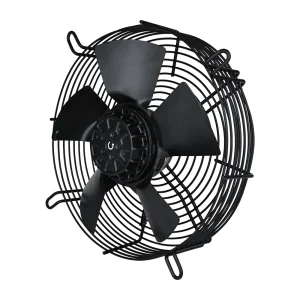
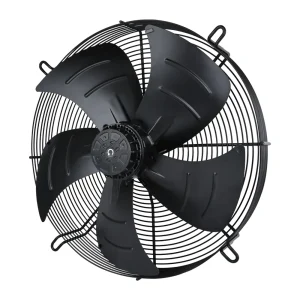
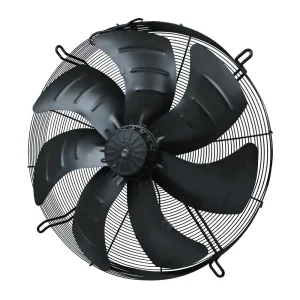
Browse by series
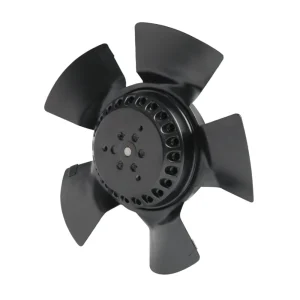
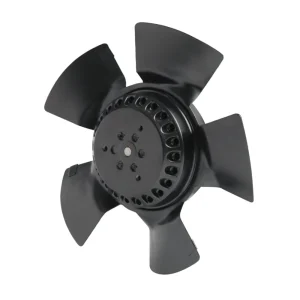
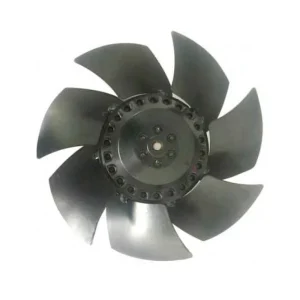
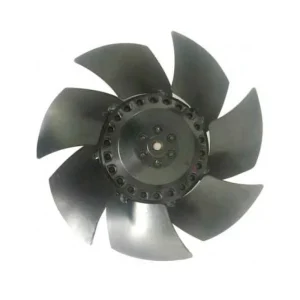
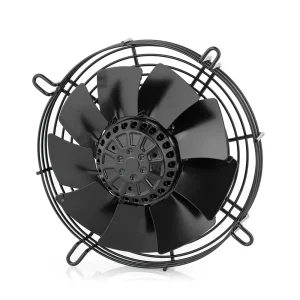
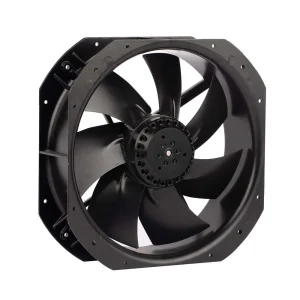
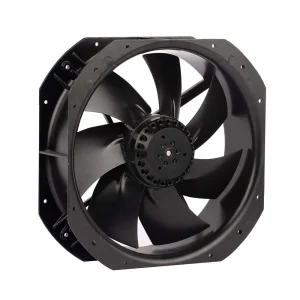
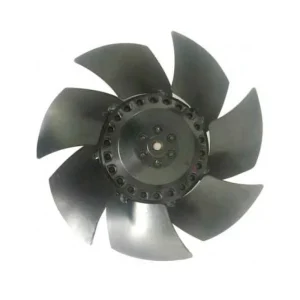
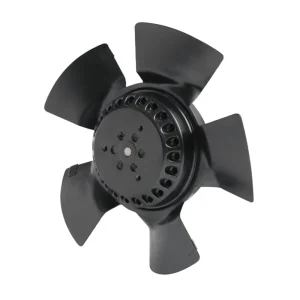
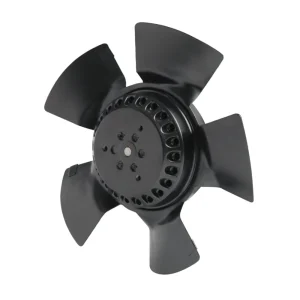
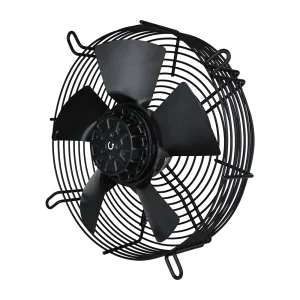
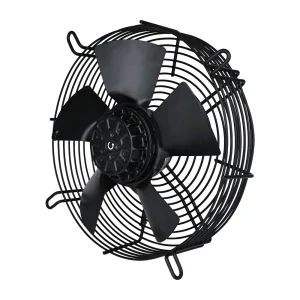
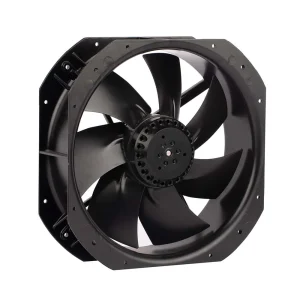
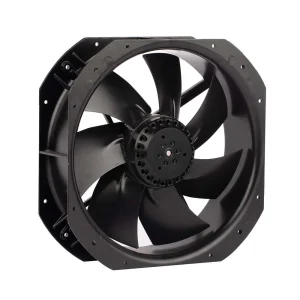
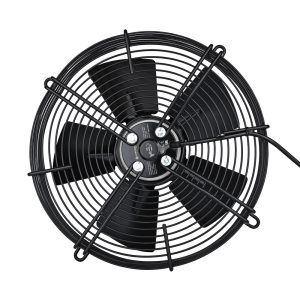
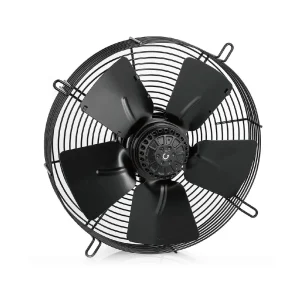
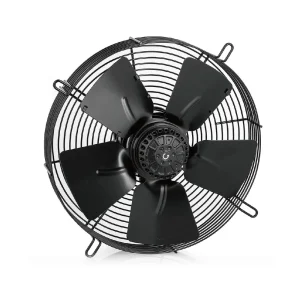
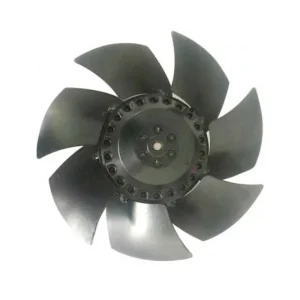
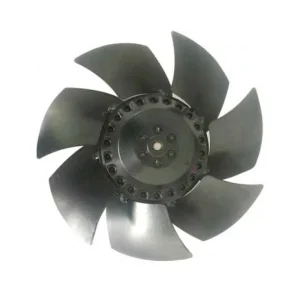
AC Axial Fans — selection guide
AC Axial Fans: 203 models, impellers Ø145–910 mm, maximum airflow 268–31,106 m³/h, static pressure to 391 Pa, AC motors, across 54 series. 1 of them carry a measured P-Q curve and 201 a dimensional drawing.
LWAA AC axial fans are external-rotor fans for fixed-speed duties from Ø145 to Ø910 mm. The code tells the configuration: LWAA4E400S-5MEW is a 4-pole single-phase (E; D = three-phase) Ø400 mm fan. Pole count sets the speed and therefore the pressure and noise: 2-pole for the small Ø145–250 mm sizes, 4-pole for Ø250–550 mm, 6- and 8-pole for the large Ø600–910 mm fans. Supply is 220 / 230 V single-phase or 380 / 400 V three-phase, with 60 Hz and 480 V variants on some sizes.
Most models are IP54, rated −30 to +60 °C, with cold-rolled-steel impellers and maintenance-free ball bearings. Because no electronics are involved, these are the fans specified where the duty is constant and first cost decides — condensers, dry coolers and simple ventilation.
How to select from this range
- Pick the diameter for airflow and the pole count for pressure: at the same Ø450 mm a 4-pole fan delivers roughly twice the airflow of a 6-pole fan at about 6 dB(A) more noise.
- Choose single-phase (E) for equipment sold to end users and three-phase (D) for plant with a 380 / 400 V supply.
- Use the coil pressure drop, not free-air airflow, when reading the curve.
- Voltage-controllable versions allow simple step control; for continuous modulation move to the EC line on the same mounting dimensions.
Where these fans are used
- Condensers and dry coolers
- Cold-room evaporators
- Heat-pump outdoor units
- Wall and roof ventilation
Every figure above is measured on our own test rigs per AMCA 210 / ISO 5801 methods — see the test labs and certificates. Final selection is confirmed at the duty point and by project validation.
FAQ — AC Axial Fans
What is the difference between E and D in the LWAA code?
E is single-phase 220 / 230 V, D is three-phase 380 / 400 V. Both use the same impeller and mounting, so a unit can be offered in either supply without re-tooling.
Which LWAA sizes have the most variants?
Ø400 and Ø450 mm (LWAA4E400 / 4D400 / 4E450 / 4D450) with 9–13 versions each, followed by Ø250 and Ø350 mm — these are the condenser and heat-pump sizes that ship fastest.
Can AC axial fans be speed-controlled?
Voltage control (transformer or triac) works on many single-phase sizes with reduced airflow; for proportional control, feedback and part-load efficiency use the LWAE3G EC fan of the same diameter.